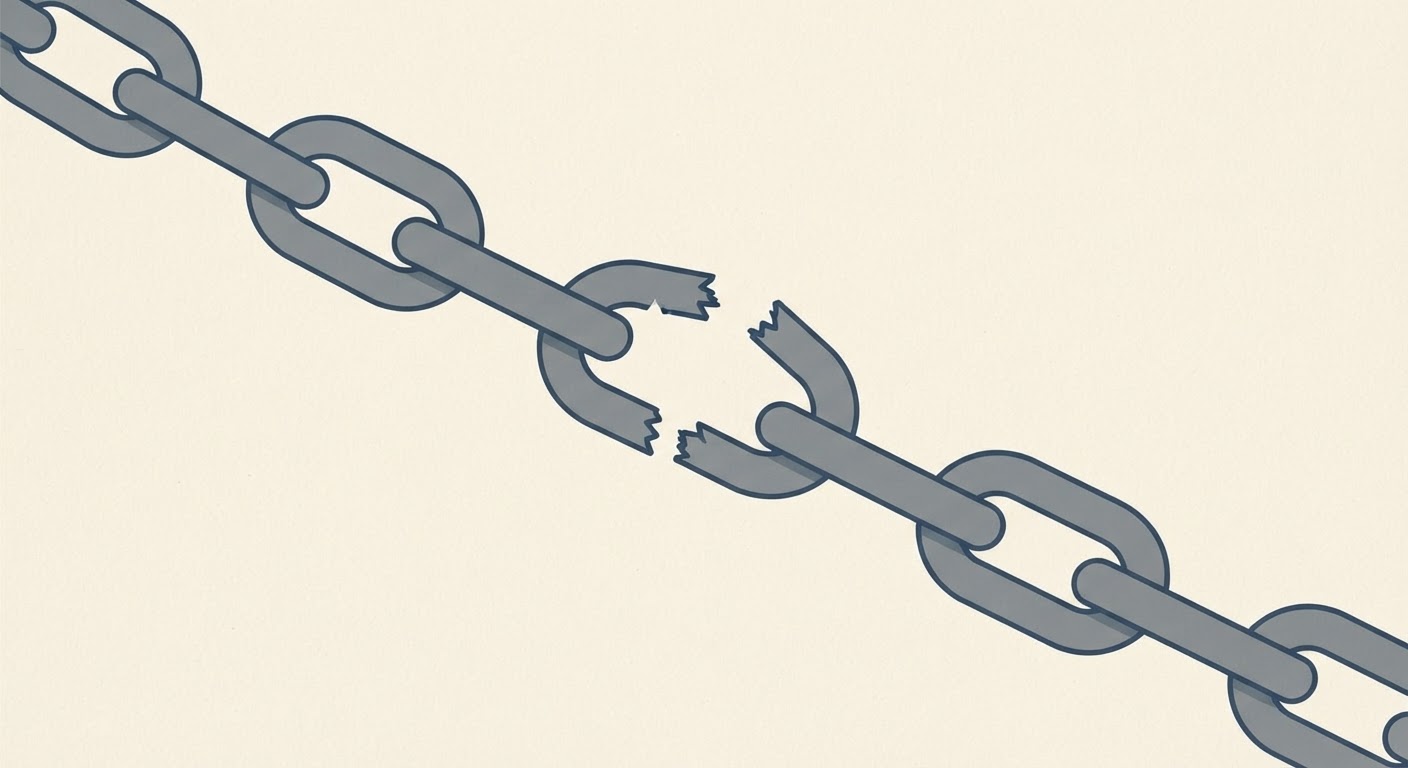
What insurers mean by “continuous coverage”
Continuous coverage is exactly what it sounds like: an unbroken record of active auto insurance, with no gaps between the day one policy ends and the day the next one begins. Insurers don’t just check whether you have a policy right now. They check whether you’ve had one, without interruption, for months or years back.
This matters because continuous coverage is treated as a proxy for risk, separate from your driving record. Two drivers with identical accident and ticket histories can be priced differently if one has carried insurance without interruption and the other had a stretch of a few weeks with nothing in force. The logic insurers use is that people who let coverage lapse are statistically more likely to file claims or lapse again, even if there’s no accident anywhere in their file. Whether or not you find that logic fair, it’s baked into how premiums are calculated across the industry.
A lapse is different from a cancellation for nonpayment, though the two often travel together. You can also generate a lapse by:
- Selling a car and not adding a replacement to a policy quickly enough
- Switching companies and having the start date of the new policy land after the end date of the old one
- Letting a policy expire while you shop for a better rate, planning to “get to it” within a few days
- Moving between states and assuming your existing policy transfers automatically on the same timeline
None of these require an accident, a ticket, or even bad intent. They just require a scheduling gap, and insurers track scheduling gaps closely.
How a lapse is detected across companies
Drivers sometimes assume that a short gap is invisible unless they volunteer it. In practice, it’s usually visible whether they volunteer it or not, for a few structural reasons.
First, most states run some version of an electronic verification system that insurers report to when a policy starts or ends. This exists mainly for law enforcement and registration purposes, but it also means lapse dates are logged in a place other than your own paperwork.
Second, when you apply for new coverage, the application asks for your prior insurance history, and insurers can cross-check what you report against industry databases that track continuous coverage across carriers. This is separate from the databases that track claims history, but insurers frequently pull both at the same time during underwriting.
Third, even if a gap technically slips through unnoticed by any database, it tends to surface anyway at the worst possible moment: when you file a claim and the adjuster requests proof of continuous coverage as a matter of routine file-building, or when you renew and the new insurer asks for your prior carrier’s declarations page showing the exact expiration date.
The practical takeaway is that treating a lapse as something you can quietly absorb without consequence is a bad bet. It’s not like leaving a parking ticket unpaid in a jurisdiction that never checks. The systems that catch it are already running in the background of nearly every quote and every claim.
The discount you lose and how long it takes to rebuild
The continuous-coverage discount (sometimes labeled that directly on your declarations page, sometimes folded into a broader “loyalty” or “persistency” credit) is one of the larger discounts most drivers qualify for without doing anything except staying insured. Losing it isn’t like losing a small add-on discount for paying electronically. It’s a rate tier change, and rate tier changes move the whole premium, not a line item.
The mechanics vary by company, but the shape is consistent:
- The discount doesn’t reduce gradually — it drops to zero. A 30-day lapse is treated the same as a 30-day lapse followed by nothing for years. There isn’t a sliding scale where a short gap costs you a little and a long gap costs you a lot; most insurers have a threshold (often stated in their underwriting guidelines, and worth confirming with your own insurer), and crossing it resets you to “no continuous coverage” status regardless of how many days over the line you are.
- The rebuild is time-based, not payment-based. You don’t earn the discount back by paying your next few premiums on time. You earn it back by accumulating a new run of uninterrupted months or years, exactly as if you were a new driver building history for the first time. If the discount originally took a set number of years to reach its maximum value, you’re generally looking at that same climb again.
- It compounds with other underwriting flags. A lapse on its own is a rate hit. A lapse that also gets you classified as having a “gap in insurance history” on a new application can trigger a broader recheck of your file, sometimes pulling in a fresh credit-based insurance score pull or a fresh motor vehicle report, either of which can move your rate independently of the lapse itself.
Here’s the part that surprises people: the dollar impact of losing this discount often has nothing to do with how long the lapse lasted. A three-day gap and a three-month gap frequently produce the identical rate consequence, because the trigger is binary — covered without interruption, or not. If you’re going to have a gap at all, there’s no premium argument for keeping it short beyond the separate risk of driving genuinely uninsured, which is its own problem.
| Situation | Effect on continuous-coverage discount | What restores it |
|---|---|---|
| Switched carriers with a same-day start | No effect | N/A — discount carries over if reported accurately |
| Policy lapsed 5 days between carriers | Usually reset to zero | New qualifying period, same as a first-time insured driver |
| Policy lapsed 45 days while shopping | Reset to zero | Same qualifying period as above — length past the threshold doesn’t add extra penalty |
| Policy canceled for nonpayment, reinstated same week | Often reset, even if “reinstated” rather than rewritten | Depends on carrier — ask whether reinstatement preserves continuity |
Because thresholds, exact discount percentages, and rebuild timelines vary by company and by state, the only reliable way to know your own numbers is to ask your current or prospective insurer directly: what’s the length of gap that triggers a reset, what is the discount worth at each tier, and how long does it take to climb back. Get the answer in writing or saved in a chat transcript, not just verbally from a call center, since these figures do get updated over time.
Bridging a gap without letting coverage lapse
Most lapses aren’t caused by drivers deciding to go without insurance. They’re caused by timing mistakes during a transition. The fix is almost always procedural, not financial.
When switching carriers
Don’t cancel the old policy until the new one’s effective date is confirmed in writing. The safest sequence is: get the new policy’s start date locked in first, then cancel the old policy for a date on or after that start date. A one-day overlap costs you nothing meaningful. A one-day gap costs you the full reset described above.
When selling or replacing a vehicle
If you’re between cars — old one sold, new one not yet acquired — ask your insurer about a named-driver or non-owner policy that keeps your coverage history active even without a car titled in your name. This is a narrower, cheaper product than a standard auto policy, and it exists specifically to prevent this kind of gap.
When moving states
Insurance doesn’t always transfer automatically the day you cross a state line, and requirements differ by state. Contact your insurer before the move, not after, and ask explicitly whether your current policy remains valid during the transition or whether you need a new policy issued to avoid a gap.
When you can’t pay on time
Grace periods exist, but they’re set by your policy contract and by state rules, and they’re not universal or automatic. If you’re going to miss a payment, call the insurer before the due date rather than after the cancellation notice arrives. Ask specifically whether a short extension is available and whether it will be reported as a lapse regardless of whether coverage was technically restored.
When you’re shopping for a better rate
Get the new quote finalized and the new policy’s start date confirmed before touching the old one. Comparison shopping is worth doing regularly, but the order of operations matters more than the few days you might save by canceling early.
The common thread in all four situations is the same: the sequencing is what protects the discount, not the dollar amount you spend during the transition. A driver who overlaps two policies by a week has paid for a week of coverage they arguably didn’t need. A driver who lets coverage lapse for that same week has reset a discount that can take years to fully rebuild. Arithmetically, the overlap is the cheaper mistake to make, and it isn’t close.