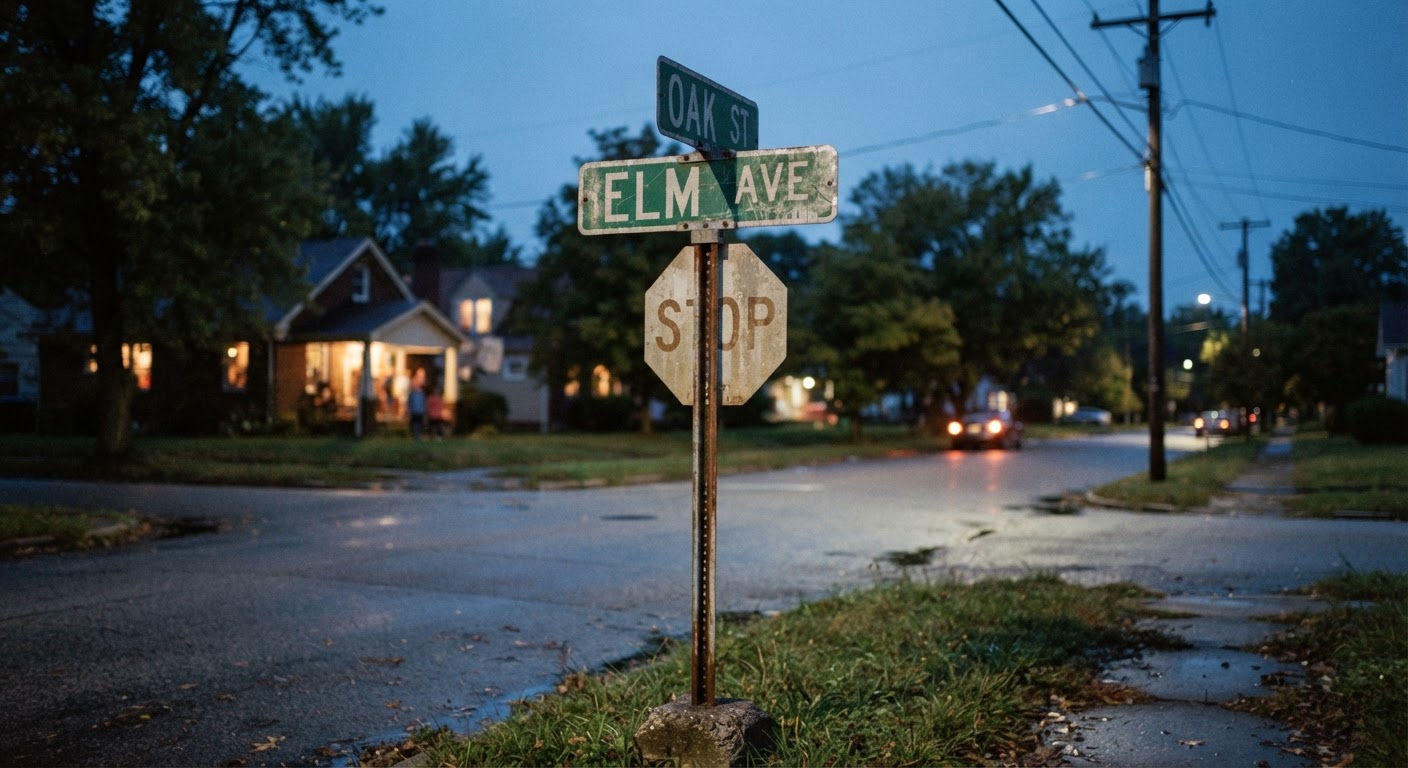
What “Garaging Address” Actually Means to an Insurer
Every auto policy asks for a garaging address, and drivers often confuse it with a mailing address or the address on a driver’s license. It isn’t the same thing. The garaging address is the specific location where the vehicle spends most nights — the driveway, the apartment lot, the parking garage attached to your building. Insurers care about this because it’s the single best proxy they have for where a car is physically exposed to risk when nobody’s driving it and, statistically, for the kind of roads and traffic density surrounding most of its trips.
This distinction matters more than it sounds. If you live in one zip code but keep your car overnight at a partner’s place in another, or if you moved and never updated your policy, the insurer is pricing risk for the wrong location. That’s not a technicality they ignore — garaging address is one of the first fields underwriting systems pull to build your rate, right alongside your driving record and the vehicle itself.
The address feeds into several layered datasets: local claim frequency, claim severity, theft rates, weather exposure, litigation patterns, and even repair cost benchmarks tied to regional labor rates and parts availability. A zip code isn’t just a dot on a map to an insurer — it’s a bundle of historical loss data going back years, updated as new claims come in from that area.
Theft, Vandalism, and Claim Density by Area
Comprehensive coverage — the part of your policy that pays for non-collision damage like theft, vandalism, fire, and falling objects — is where garaging address shows up most nakedly in the math. Insurers track theft and vandalism rates at a granular level, often finer than a full zip code, because these events cluster hard. A neighborhood with a rash of catalytic converter thefts or a particular model that’s easy to steal in that area will show elevated claim frequency long before it becomes a headline.
Liability and collision coverage are shaped by area too, just through a different mechanism: claim density. Areas with heavier traffic, more intersections, higher pedestrian volume, or a history of severe weather events generate more claims per insured vehicle, and more expensive ones. A zip code with a lot of uninsured or underinsured drivers on the road also pushes up the cost of certain coverages, because insurers have to account for the possibility that the other driver in a crash won’t have adequate coverage of their own.
None of this is about judging a neighborhood morally. It’s actuarial pattern-matching: take five years of claims data, sort by location, and let the frequency and severity numbers speak. Two zip codes that look similar on a map — similar home values, similar demographics — can price very differently if one happens to sit near a high-volume commuter corridor or has a local history of hailstorms and the other doesn’t.
What Tends to Move the Needle Locally
- Theft and vandalism history — specific to the immediate area, not just the metro region.
- Traffic density and road type — highway-adjacent or high-intersection areas usually see more claims.
- Weather exposure — hail, flood, and wildfire risk vary block by block in some regions, not just state by state.
- Local repair costs — labor rates and parts logistics differ by region and factor into severity.
- Uninsured motorist rates — areas with more uninsured drivers raise the cost of protecting yourself against them.
If you want to see how your specific area stacks up, most state insurance department websites and some insurer sites publish general loss data or let you compare quotes across nearby zip codes. That’s a more reliable way to gauge your local exposure than guessing from news coverage or neighborhood reputation.
Zip Code Versus Driving Record: Which Weighs More
This is the question that actually matters when you’re trying to understand your own bill, and the honest answer is: it depends on how clean or dirty your record is, and how extreme the zip code is.
Think of your premium as a base rate multiplied by a stack of factors — location, driving record, vehicle, coverage limits, credit-based insurance score where it’s used, and so on. A garaging address in a high-claim area applies its multiplier to everyone who lives there, regardless of how careful they are individually. A driving record, by contrast, applies its multiplier to you specifically, and it tends to move in bigger single jumps. One at-fault accident or a moving violation can shift your rate more sharply, in one event, than switching between two moderately different zip codes.
But zip code has a structural advantage: it’s a permanent multiplier, not an event that fades. A speeding ticket or an accident typically ages off your rating factors after a few years, depending on the insurer and the state. Your garaging address doesn’t age off anything — it just keeps applying, year after year, for as long as you live there. Over a long enough period, a bad zip code sitting quietly under a clean driving record can outweigh the cumulative discount you’d expect from years of careful driving.
Here’s a rough way to think about how the two factors tend to behave over time:
| Factor | How it typically moves your rate | How long it lasts |
|---|---|---|
| At-fault accident | Sharp increase, often the single largest jump most drivers see | Usually fades from rating after a few years, varies by insurer/state |
| Moving violation | Moderate increase, size depends on severity | Similar aging-off window as accidents, often shorter |
| High-claim garaging zip code | Steady surcharge applied continuously | Persists as long as you’re garaged there — no expiration |
| Low-claim garaging zip code | Steady discount applied continuously | Persists as long as you’re garaged there |
The practical takeaway: if you have a rough driving record, cleaning it up (staying violation-free until old incidents age off) will probably do more for your rate than moving would. If your record is already clean and your rate still feels high, garaging address is one of the first places worth investigating, because there’s no incident on your record left to “fix” — the address is doing the work.
What Changes When You Move
Relocating, even within the same metro area, can shift your premium noticeably, and it’s worth understanding the mechanics before you assume the move itself caused the change.
When you update your garaging address, the insurer re-runs the location-based factors: local claim frequency, theft data, weather exposure, and often the mix of coverage that state or regional norms suggest you carry. If you cross a state line, more changes stack on top of the zip code effect — different rules for how fault is assigned, different requirements around minimum financial responsibility, different regulatory environment for how insurers can price and file rates. Two moves can look similar in miles and feel wildly different in premium impact if one stays within a state and the other doesn’t.
A few things worth doing when your garaging address changes:
- Update it immediately, not at renewal. Driving on an outdated garaging address isn’t just a rating issue — it can create friction if you ever need to file a claim and the address on file doesn’t match reality.
- Re-shop rather than assume continuity. The insurer that was competitive for your old address may not be competitive for your new one; local claims data and their appetite for that region both factor in.
- Ask what specifically changed. A good agent or a clear online breakdown should be able to tell you whether an increase came from location factors, a change in state, or something else entirely — bundle it all into “the move” and you lose the ability to plan around it.
- Recheck coverage limits, not just price. Different areas carry different practical exposure — a zip code with more uninsured drivers is a reasonable prompt to look at your uninsured motorist coverage, independent of what happens to premium.
It’s also worth noting that a move doesn’t have to be dramatic to matter. Moving a few miles from a dense urban core to a quieter suburb, or vice versa, can cross a boundary in the insurer’s rating territory even if the drive to work barely changes. Rating territories aren’t drawn to match how residents perceive their own neighborhoods — they’re drawn around loss data, and loss data doesn’t always respect the lines people use to describe where they live.
The Bottom Line on Location
Garaging address is one of the few major rating factors you have almost no ability to argue with after the fact — it’s not a behavior you can correct, it’s a location you either live in or don’t. That’s exactly why it’s worth understanding rather than resenting: once you know how much of your premium is coming from where the car sleeps versus how you drive it, you can make more useful decisions. If the address is the dominant factor, shopping around after a move — and being specific about garaging address when you request quotes — will tell you more than tweaking coverage limits ever will. If your driving record is the dominant factor, the address is mostly noise, and time and a clean record are doing the real work.